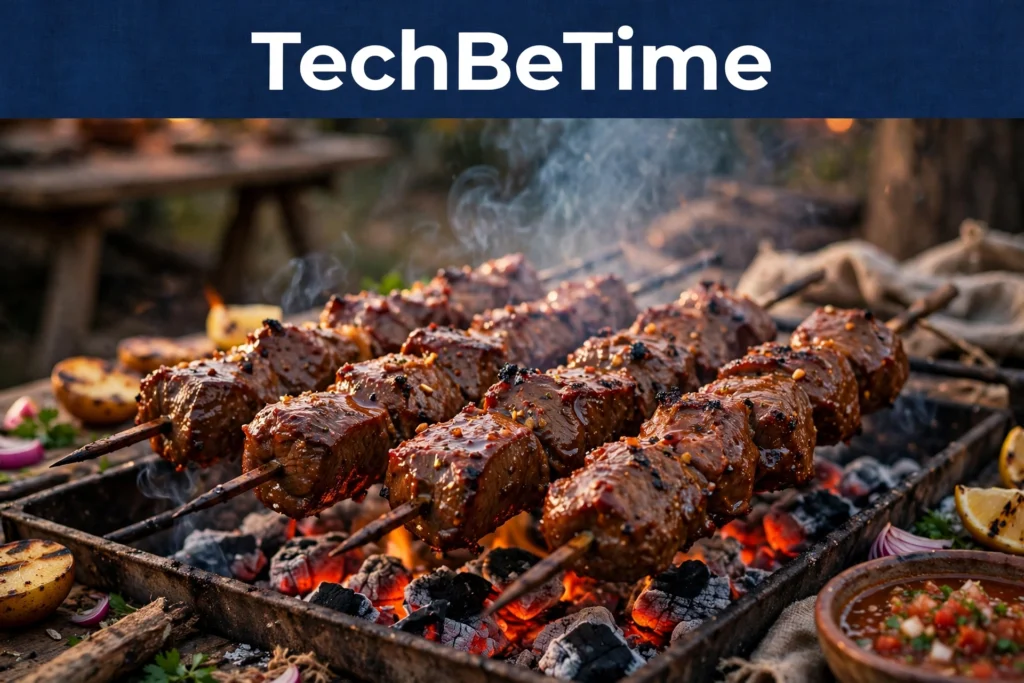
Smoke curling off a small charcoal grill, the smell of cumin and garlic in the night air, and a skewer of glistening meat handed over with a boiled potato and a spoonful of peanut sauce. That is anticucho boliviano — and if you have ever typed “best anticucho boliviano near me” into your phone, you know the problem: this dish is famous, but it is surprisingly hard to find outside Bolivia.
This guide explains what anticucho boliviano is, how it differs from the Peruvian version, what makes a great one, and how to find the best spots near you.
1. What Is Anticucho Boliviano?
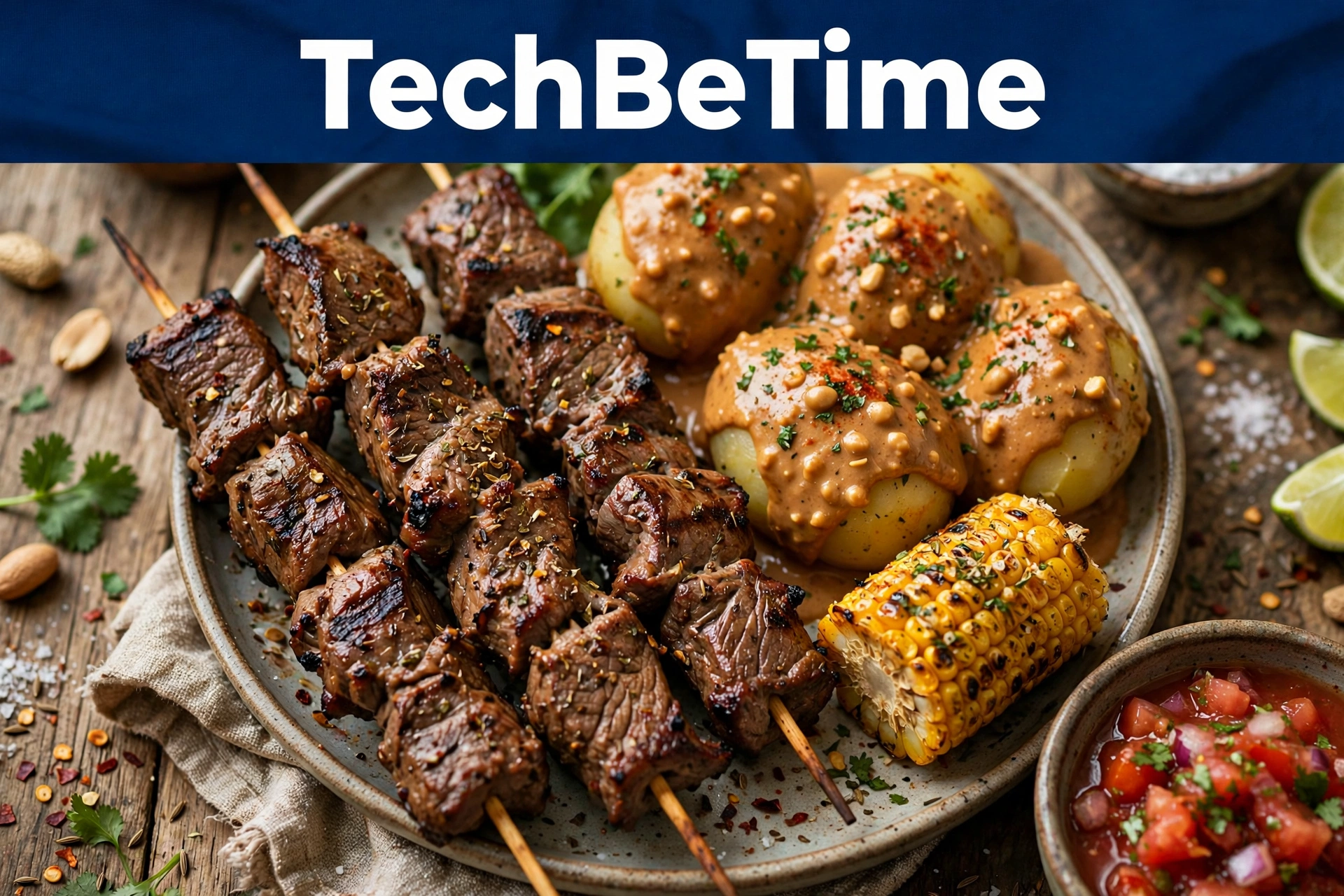
Anticucho boliviano is a Bolivian skewered meat dish, traditionally made with beef heart, marinated in cumin, garlic, vinegar, locoto, and ají colorado, grilled over charcoal and served with boiled potato, peanut sauce, and llajwa salsa.
The name comes from the Quechua words anti (eastern Andes) and kuchu (cut). It dates to the pre-Columbian Inca Empire and was adapted in the colonial era, when beef replaced llama meat.
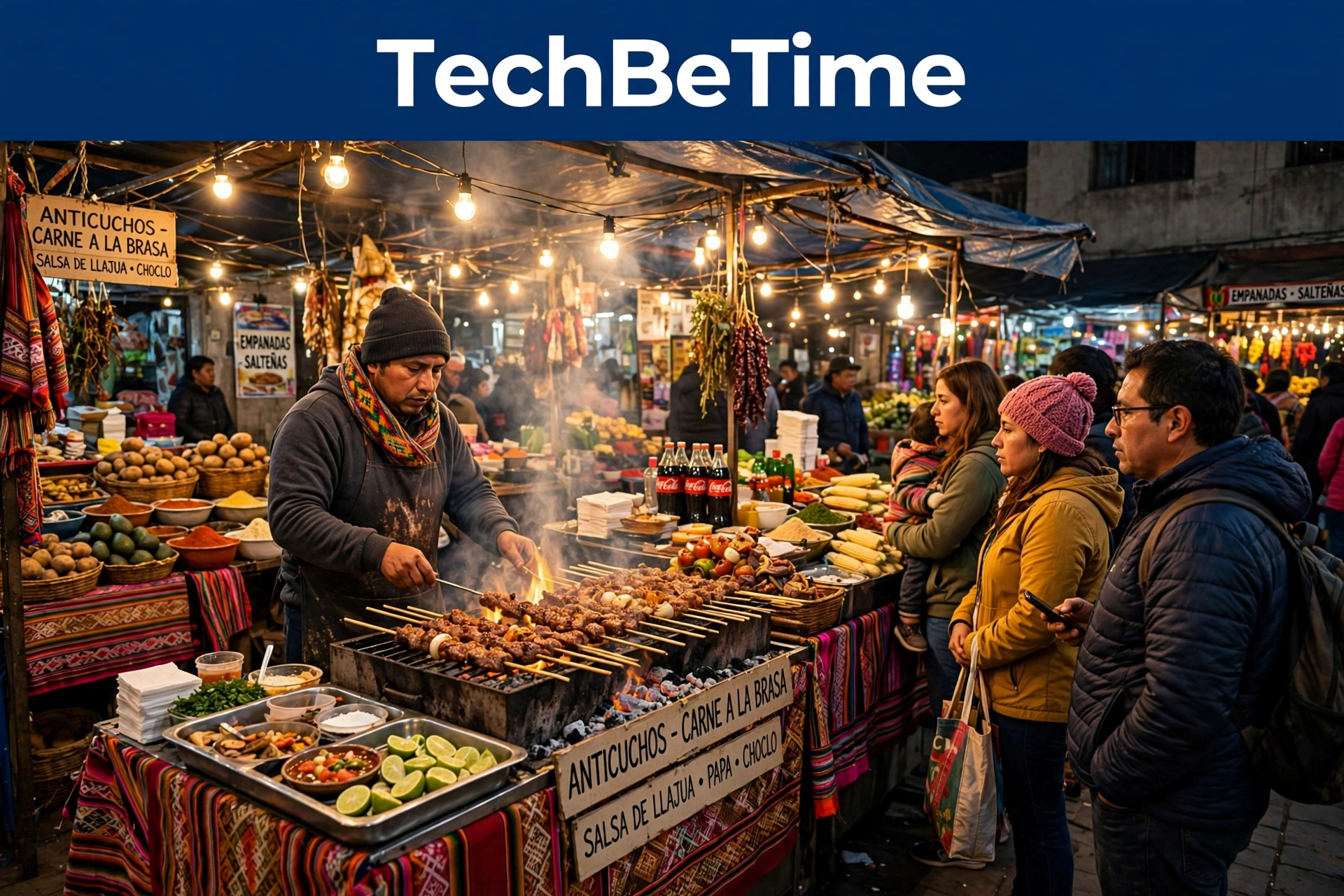
In Bolivia, anticucho is street food at its core. Vendors — known as anticucheras — grill over small charcoal fires on street corners and in markets at night. It is a favourite night delicacy in La Paz, Cochabamba, and Santa Cruz.
The traditional meat is beef heart: lean, dense, and rich in minerals, it takes the bold marinade better than ordinary muscle meat. Well-prepared, it is mild and tender. Chicken heart is also used.
2. Anticucho Boliviano vs Peruvian Anticucho: What’s the Difference?
Both share the same Andean roots, beef heart, and technique: marinate in spiced vinegar, grill over charcoal. The differences are spicing and accompaniments.
| Bolivian anticucho | Peruvian anticucho | |
|---|---|---|
| Peppers | Locoto and ají colorado — sharper heat | Ají panca — brick-red, mild, slightly fruity heat |
| Signature sauce | Peanut sauce (maní) — thick, slightly spicy, slightly sweet | No peanut sauce |
| Salsa | Llajwa — fresh tomato and locoto salsa | Ají-based sauces |
| Sides | Boiled or roast potato, sometimes corn (choclo) | Boiled potato and corn |
The peanut sauce is the single biggest marker of the Bolivian version. Thick and nutty, it coats the potato and softens the char, while llajwa adds a fresh contrast.
So searching for the best anticucho boliviano near me is not the same as searching for Peruvian anticuchos. Without peanut sauce and llajwa, it is not the Bolivian dish.
3. What Makes a Great Anticucho Boliviano?
A great anticucho is easy to recognise once you know what to look for. The best vendors get five things right:
- Real fire. Anticuchos need charcoal or wood fire. Gas grills cannot produce the caramelised, smoky crust that defines the dish.
- A long marinade. The meat should have spent hours — ideally overnight — in cumin, garlic, vinegar, and dried peppers.
- The right cut. The meat should be tender, not chewy or dry. Properly cooked beef heart is firm but yielding; rubbery means under-marinated or overcooked.
- The peanut sauce. It should be thick, nutty, and warm, not thin and watery, and served generously over the potato.
- Fresh llajwa. The tomato and locoto salsa should taste bright and freshly made — it is the dish’s acid balance.
4. Where to Find the Best Anticucho Boliviano Near Me
Honestly: there is no single verified directory of Bolivian anticucho vendors, and no national chain serves it. The dish lives in street stalls, markets, and small family restaurants — which is why it takes effort to find.
In Bolivia, the search is easy. Night markets in La Paz, Cochabamba, and Santa Cruz are full of anticucho vendors.
In the United States, the best bets follow the Bolivian community:
- Arlington, Virginia and the Washington DC metro area. The largest Bolivian community in the US lives here, and anticuchos appear regularly.
- Providence, Rhode Island. The community here has supported traditional food businesses for decades; anticucho appears at events and restaurants.
- Queens, New York. Jackson Heights has South American restaurants where Bolivian dishes sometimes appear.
- Miami, Florida. Bolivian dishes surface in restaurants and at gatherings.
Beyond restaurants, look for community events. Bolivian festivals and cultural celebrations are often where you will find the most authentic anticucho boliviano near you — and local community groups on social media are the best source of dates.
5. How to Search Like a Local: 5 Smart Ways to Find It
Since the dish hides in small places, your search strategy matters more than your search engine:
- Search for “Bolivian restaurant” first. Most do not list anticucho online, even when they serve it. Call and ask about peanut sauce and llajwa.
- Use Spanish search terms. Try “anticucho boliviano”, “anticuchera”, and “comida boliviana” with your city name.
- Check Google Maps photos, not just reviews. Look for skewers over charcoal, peanut sauce, and llajwa — a photo tells you more.
- Read reviews for the right words. Mentions of “peanut sauce”, “llajwa”, or “charcoal” are strong signals; “great food” tells you nothing.
- Ask the community. Bolivian community groups on social media usually know exactly who is grilling this weekend.
Anticucho hunting is best done on foot. Markets and stalls are rarely listed accurately online, and the smell of charcoal is the most reliable map there is. A slow walk through a market district — and a bit of walking afterwards — is part of it.
6. How to Judge a Spot Before You Order
You have found a vendor. Before you order, run through this quick checklist:
- Is there real charcoal? Glowing coals and a little smoke are good signs. An electric griddle is not.
- Is there a queue? A line of locals waiting is the oldest and most reliable review in street food.
- Is the meat cut to order? The best vendors cut and skewer the meat as orders come in. Pre-skewered meat in the sun is a warning sign.
- Does the peanut sauce look fresh? It should be thick and warm, not separated, cold, or grey.
- Is the llajwa bright? Fresh tomato salsa looks red and alive. Dull or watery means the kitchen is cutting corners.
- How does it smell? Cumin, garlic, and wood smoke should hit you from several metres away.
If a spot passes all six checks, order with confidence — and order two skewers.
7. What to Expect on the Plate — and How to Order
A typical serving is one or two skewers with a boiled or roast potato, a generous spoonful of peanut sauce, grilled corn when available, and llajwa on the side. In Bolivia it is usually not the main course — it is a night snack.
A few things first-timers should know:
- Eat it with your hands — that is how it is eaten in Bolivia.
- Ask for extra llajwa if you like heat. Locoto is sharper than most people expect.
- Pair it simply: a cold beer or a glass of chicha morada (purple corn juice).
- Bring cash. Street stalls and market vendors often do not take cards.
- Go at night. The grills light up as the sun goes down.
Anticucho is known as popular and inexpensive street food — expect modest prices, though they vary, so check the menu first.
8. Can You Make Anticucho Boliviano at Home?
Yes — and if you cannot find a vendor near you, this is the next best thing. Buy trimmed beef heart from a butcher and cut it into pieces of about 2 to 5 cm. Make a marinade paste from vinegar, garlic, cumin, salt, oil, and dried locoto or ají colorado. Marinate for at least 4 hours, ideally overnight. Thread onto metal skewers, grill over hot charcoal until charred outside and juicy inside, and serve with boiled potato, peanut sauce, and fresh llajwa. It will not match a La Paz street stall, but it beats any gas-grill restaurant version.
Final thoughts
The best anticucho boliviano near you is probably not on a delivery app or in a restaurant with a glossy menu. It is on a charcoal grill at a night market, in a small Bolivian restaurant in Arlington or Providence or Queens, or at a community festival. That is the whole point: it is street food, and street food rewards people who go looking for it.
Know what to look for — real charcoal, a long marinade, tender beef heart, thick peanut sauce, and fresh llajwa. Search in Spanish, follow the smell of smoke, trust the queue, and when you find it, eat it with your hands and order a second skewer. For more guides like this, visit TechBeTime.
FAQ
What is anticucho boliviano?
Anticucho boliviano is a Bolivian skewered meat dish — traditionally beef heart marinated in cumin, garlic, vinegar, locoto, and ají colorado, grilled over charcoal and served with boiled potato, peanut sauce (maní), and llajwa salsa.
What is the difference between Bolivian and Peruvian anticucho?
Both use beef heart marinated in spiced vinegar and grilled over charcoal. The Bolivian version uses locoto and ají colorado and is served with peanut sauce and llajwa salsa. The Peruvian version uses ají panca and is served with potato and corn but no peanut sauce.
Is anticucho boliviano made with beef heart?
Yes, traditionally. Beef heart is the classic choice because it is lean, dense, and holds the bold marinade well. Chicken heart, beef, chicken, and pork are also used by some vendors, especially outside Bolivia.
Where can I find anticucho boliviano near me in the US?
Look for Bolivian restaurants and community events in the Washington DC / Arlington area, Providence, Queens, and Miami. Search in Spanish, check Google Maps photos, and ask local Bolivian community groups.
Is anticucho boliviano spicy?
It can be. The locoto and ají colorado give it a sharper heat than the Peruvian version, and the llajwa adds more spice. Sensitive to heat? Ask for the llajwa on the side.