How do banks decide the interest rate earned on your savings?
To know this, familiarise yourself with the calculation method and factors influencing interest rates. Irrespective of whether you prefer opening a Zero Balance Account online or a regular account, gaining a proper understanding of these basics will help maximise your savings and choose an account aligning with your banking needs.
Read on to understand the calculation of Savings Account interest rates by banks.
What is the formula for Savings Account interest?
The formula to calculate the Savings Account interest is:
Daily Interest = (Daily Balance*Interest Rate)/365
As per the guidelines of the Reserve Bank of India (RBI), Savings Account daily interest is calculated based on the closing balance of your account. Also, you can consider the Savings Account calculator for calculating the interest earned on your balance.
How do banks calculate the interest rates on Savings Account?
The majority of banks choose the daily balance method to calculate Savings Account interest rate. If you choose to open a Savings Account online, the balance you maintain in your account on a daily basis is considered for interest rate calculation. The interest gets credited to your account on a quarterly basis.
Consider an example. Suppose you have ₹10,000 (principal amount) in your Savings Account with a 6% rate of interest. Now, to find the rate of interest you will earn in a quarter, follow the steps below:
Calculation of daily interest rate: 6%/365 = 0.000164383 (approximately)
Application of daily interest to account balance: ₹10,000*0.000164383 = ₹1.64383 per day
Multiply with number of days in quarter: In case of 90 days, ₹1.64383*90 = ₹147.94
Thus, with a deposited amount of ₹10,000 and a 6% annual rate of interest, you will earn quarterly interest of ₹147.94.
Now, you might be wondering: What determines the interest rate as offered by banks on Savings Account? Find below:
RBI’s prevailing market interest rate
Any changes in the monetary policy of the Reserve Bank of India, such as the repo rate, impact the interest rates banks offer.
Internal policies of banks
Each bank offers its own interest rate on Savings Account depending on funding, operational costs, and strategies.
Types of savings account
Interest rates differ according to the different types of Savings Account you choose. It can be a premium category, a senior citizen savings account, or others.
Maintained balance in account
If customers maintain a balance above their threshold limit, some banks provide high rates of interest.
How to earn more interest in a Savings Account?
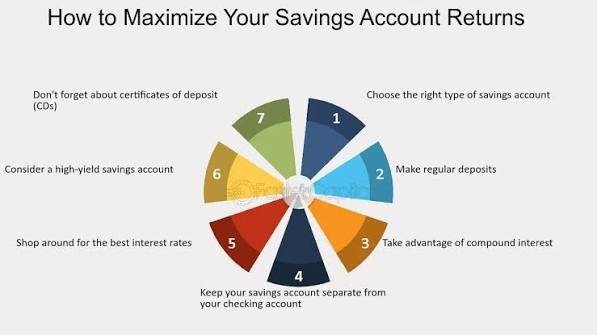
Earning interest on your Savings Account lets your money grow over time. Listed below are the simple strategies to get more interest earning:
On time and regular deposits
Depositing money in your Savings Account on a regular basis increases your account balance and consequently, the interest. Even a small but regular contribution can add up to significant interest earnings over time.
Opt for automatic transfer
Choose automatic transfer of funds from your Current Account or Salary Account to Savings Account. This enables raising your balance without interference of manual transfer.
Avoid unnecessary withdrawals
Withdrawing amounts frequently significantly reduces your daily balance on average, thereby resulting in low interest earnings. To prevent this, avoid withdrawals and maintain a high balance in your account always.
Conclusion
A Savings Account interest might sound simple, but understanding how banks calculate interest provides you with a clearer picture of your earning potential. It also allows you to choose a Savings Account that matches your financial needs and goals. Compare different accounts and review their features to secure better interest rates and protect your savings over the long term.