
Introduction
Type “voozon com” into a search box. You will probably expect an app, a tool, or a service you can sign up for. What you actually find is something stranger — and far more interesting. Voozon.com is a free multi-niche online magazine that also sells guest posts. In September 2026, its Google traffic reportedly collapsed by almost 98% in the space of ten days.
That single fact changes how you should read everything about this site. Voozon is a real, long-running publication that is perfectly safe to browse, yet a genuinely risky place to spend money on SEO. It is the kind of site where the reading experience and the business proposition tell two very different stories. If you only hear one of them, you will make the wrong decision.
Therefore, this guide untangles both. It explains what Voozon.com actually is and what it publishes. It also explains why the safety checkers disagree so sharply about it. Finally, it looks at whether the site is worth your time — or your money — in 2026.
1. What Is Voozon.com?
Voozon.com describes itself as an independent digital media publication and online magazine. It loads over HTTPS and needs no account to read. It has been publishing since March 2019. Its archive holds around 1,700 posts across roughly 24 categories, including technology, business, finance, health, education, law, automotive, travel, real estate, home improvement, lifestyle, digital marketing, entertainment, fashion, gaming, movies, music, sports, news, and more.
For readers, it is a free multi-topic blog in the same mould as many general-interest sites: you visit, you read, you leave. In addition, there is no app to download, no subscription to manage, and no product being pushed at you. The articles are written in simple, beginner-friendly language, and the breadth is genuinely wide. A tech guide in the morning, a travel piece at lunch, and a health tip in the evening.
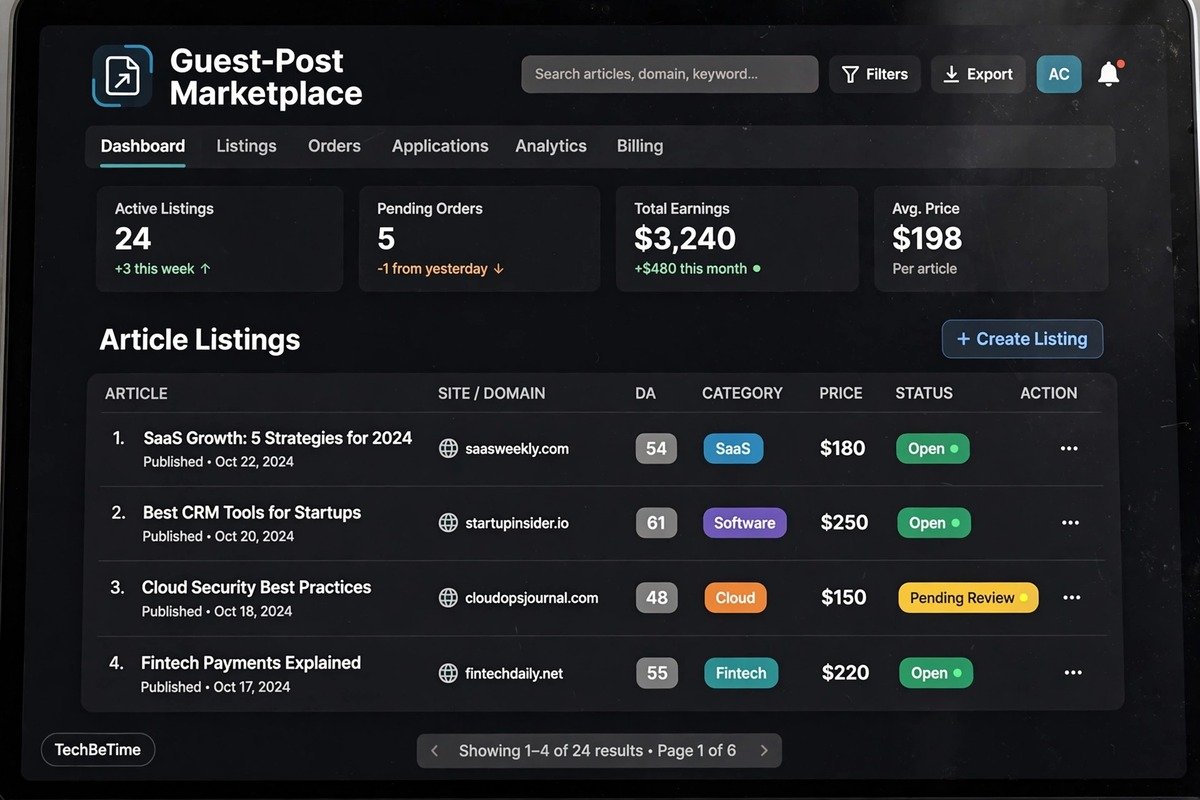
For marketers, though, Voozon is something else entirely: a guest-posting platform. Businesses and bloggers can pay to publish sponsored articles and buy homepage banner placements to gain exposure and backlinks. In short, that dual identity — free magazine on the front, paid placement business behind the scenes — is the key to understanding the site. Almost everything controversial about Voozon lives on the commercial side, not the reading side.
One warning before you believe everything you read about it elsewhere: many third-party “reviews” describe features that simply do not exist on the actual site — forums, dashboards, CRM tools, subscription tiers, and e-commerce. Those claims are unverified. As a result, this guide does not repeat them as fact. What follows is based on what the live site actually shows and what independent checkers actually found.
2. What Does Voozon.com Offer?
1. Free reading across 24 categories. Articles are open to read without signing up or paying. The mix is broad — tech guides, business advice, health tips, travel pieces, and entertainment news. In addition, the tone stays accessible throughout. If you are a casual reader looking for a quick explainer on an everyday topic, that is the whole proposition. And it works well enough.
2. Guest posts and sponsored articles. Writers and businesses can submit articles for publication, subject to editorial requirements. Paid placements are sold through the site itself and through third-party marketplaces such as Accessily, SEOClerks, and Vefogix. This is where Voozon makes its money, and where the questions start. A placement is only worth buying if the site still has an audience. That is exactly what changed in September 2026.
3. Banner advertising. Homepage banner placements are available, with a minimum booking period of three months reported in one review. Like the guest posts, their value depends entirely on how many real readers still arrive.
4. A contact page. One review reports response times of usually 24 to 48 hours, which at least suggests someone is still minding the inbox.
Pricing is the murky part. Voozon publishes no standard price list. Commercial terms “may vary” by content and partnership type, so buyers must ask before paying. Third-party marketplace listings are inconsistent. For example, Accessily lists a guest post at $160 and claims a domain authority of 62 with around 2 million monthly visitors. Other listings range from roughly $60 to $169, and one listing fell from £95 to £30 within a month. In other words, treat all of these as unverified asking prices, not facts. Note that the site’s own homepage now warns that publishing there does not guarantee Google rankings or traffic. When a site starts warning buyers against its own sales pitch, that is worth listening to.
3. Is Voozon.com Safe and Legit?
The short answer is: safe to browse, but not fully transparent — and its paid guest-post value is questionable.
- No malware or phishing flag was found from the major checkers. It does not ask readers for personal or payment data to read articles. Payment risk only arises if you buy a guest post, which is a commercial transaction, not a reading risk.
- The checkers disagree sharply. ScamAdviser calls Voozon.com “legit and safe for consumers to access”. It cites a valid SSL certificate, an old domain, and a long registration. Gridinsoft gave it 79 out of 100. But Scam Detector gave it 17.2 out of 100 — “very low trust score” — citing spam and blacklisting risk factors. These are automated scores, not proof of fraud. But the disagreement itself is worth knowing. When three tools look at the same site, they return three different verdicts. The honest conclusion is that the picture is mixed.
- Ownership is hidden. WHOIS shows the domain was created on 16 January 2008, but the registrant is “Redacted for Privacy”. No named owner, company, editor-in-chief, or office appears on the site’s public pages. However, one third-party listing names a founder in Noida, India. That is unconfirmed and should not be treated as proven.
- Lookalikes are a real risk. Do not confuse Voozon.com with
voozoon.com(flagged high-risk and blacklisted) orvoozon.com.co(a young 2026 domain). In addition, a separate “Voozon” social app on Google Play is not verified as connected to the website. If you ever decide to pay this site, the first thing to check is the spelling in your address bar.
Traffic collapse and paid-link risks
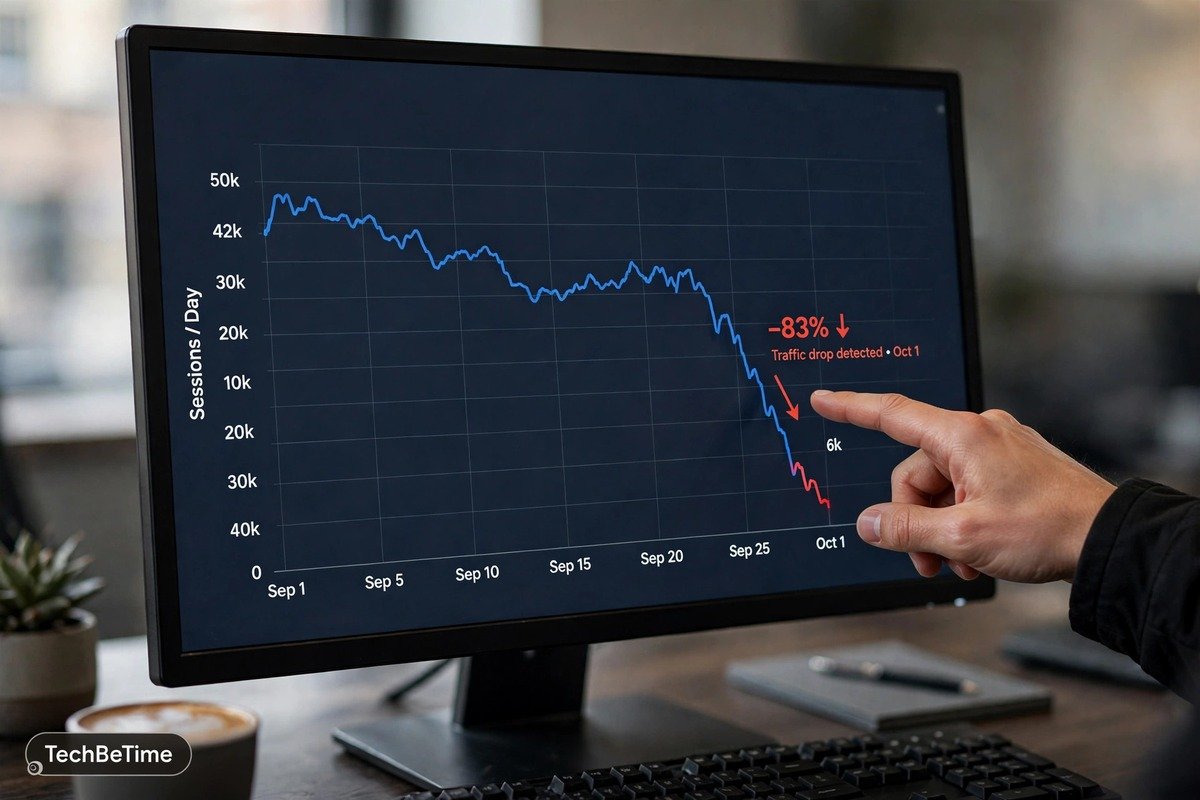
- The September 2026 traffic collapse matters. Third-party traffic estimates show Voozon climbing to around 205,000 estimated monthly visits in mid-September 2026. Then it crashed to roughly 4,800 by 24 September. That is a fall of about 97.7% in ten days, coinciding with Google’s September 2026 spam update. As a result, marketplace listings still claiming 1–2 million monthly visitors are stale and should not be believed. Whatever Voozon was as an SEO investment before that collapse, it is not the same proposition now.
- Paid links carry their own risk. Links bought for SEO can violate Google’s spam policies if they are not properly qualified as nofollow or sponsored. That risk sits with the buyer, not the reader. But it is one more reason to verify the terms in writing before paying.
4. How to Use Voozon.com Safely
- Reading is free and low-risk. Visit the correct domain, voozon.com, check the spelling, and read it like any ad-supported blog. In fact, nothing on the reading side asks for your data.
- Before paying for a guest post, verify everything in writing. Check the exact price and whether the link is dofollow, nofollow, or sponsored. Also check whether the placement is permanent and whether the page actually gets indexed. If the seller cannot answer those questions clearly, walk away.
- Do not trust stale traffic claims. Instead, ask for current, verifiable figures — not a marketplace listing from before the September 2026 collapse.
- Do not confuse it with lookalike domains. Check the exact address in your browser before you pay or share details. One extra letter is the difference between the real site and a flagged one.
- Judge each article on its own merits. Some content shows signs of AI-assisted writing, and there is no verifiable editorial team behind it. Therefore, treat individual articles as general reading rather than expert guidance.
Final thoughts
Voozon.com is best understood as a real, long-running multi-niche publication that is free and safe to read. But it is a questionable buy for SEO. Its hidden ownership, conflicting trust scores, and the September 2026 traffic collapse all point the same way. In short, enjoy it as a reader. If you are thinking of paying for a guest post, verify the placement and the link type. Also verify the current traffic before you spend anything. The site itself is not a scam. But its old reputation as a traffic source is, for now, a memory rather than a fact.
Frequently Asked Questions
What is Voozon.com?
It is a free multi-niche digital publication and online magazine covering technology, business, finance, health, travel, and more. It also sells guest posts and banner placements.
Is Voozon.com safe?
Yes, to browse. No malware or phishing flag was found, and it does not ask readers for personal or payment data. Its ownership is hidden and trust scores conflict, so caution applies to paid placements, not to reading.
Is Voozon.com legit?
It appears to be a real publication with an archive going back to 2019. Its guest-post SEO value is doubtful after its reported September 2026 traffic collapse.
How much does a Voozon guest post cost?
There is no public price list. Marketplace listings range from roughly $60 to $169, with one listing at $160. Therefore, confirm the price directly with the site before paying.
Is Voozon.com the same as Voozoon.com?
No. Voozoon.com is a different domain that has been flagged as high-risk. Always check the exact spelling before visiting or paying.