Introduction
If you searched for “pushwiki com”, the name probably made you expect a wiki. That means a site anyone can edit, with revision histories and community contributors. What you actually find is different. PushWiki.com is a free multi-topic blog. It calls itself “a collaborative knowledge platform”, but it has no public editing, no revision history, and no contributor system at all.
It is still a legitimate, safe-to-read site. But it is not a wiki, and it is not an authority. Its own About page still contains an unfilled template placeholder where the owner’s name should be, three and a half years after the domain was registered. In short, that single detail captures the site’s whole story: a working, useful-enough blog that was never quite finished. Therefore, this guide explains what PushWiki.com really is, what it offers, and whether you can trust it in 2026.

1. What Is PushWiki.com?
PushWiki.com is a free, multi-topic informational blog and content-publishing platform. Its tagline is “Helpful Guides, Tips & Information”. In fact, it describes itself as “a free guide anyone can read — clear, well-organized articles on business, technology, digital marketing, finance, health, education, law, travel, and lifestyle — plus free tools for readers and writers.”
Despite the “wiki” name, its pages are standard blog articles with titles, dates, bylines, categories, and comments. There is no public editing and no way for readers to change a page. For example, it runs on WordPress, the same platform as most ordinary blogs. That is nothing like the collaborative software a real wiki runs on.
One outdated description to ignore: an older domain directory still describes PushWiki as “a resource dedicated to push notifications”. However, that description is outdated. The live site is now a general-knowledge blog, and it has nothing to do with push notifications. So, if a review still calls it a push-notification resource, that review is describing a site that no longer exists.
2. What Does PushWiki.com Offer?
1. Free articles across seven main categories. Business, Education, Finance, Health, Law, Technology, and Travel are the seven main categories. Archive sections also include Digital Marketing, Blog, Lifestyle, Crypto, Entertainment, Fashion, Pets, Trading, and Online Game. In fact, Technology is the largest section. Law (around 5 posts) and Travel (around 6 posts) are very small, so coverage is uneven. That unevenness is worth knowing before you go looking for legal or travel advice here. In short, the site’s depth on those topics is a handful of articles, not a library.
2. Three free tools. The homepage offers a Word & Character Counter, a Citation Generator, and a Date Difference Calculator. All are free to use. In fact, they are small, practical utilities. For example, the citation generator at least fits the site’s “knowledge” positioning, even if the wiki claim itself does not hold up.
3. Guest article pitches. The site accepts “Write for us” pitches, and it has an Editorial Policy page and a weekly newsletter. An Editorial Policy page is a positive signal in principle — it is a page most low-effort blogs never write. However, whether the policy is actually followed is, as ever, a different question.
4. Completely free reading. There is no paywall, no subscription, and no login required to read. In addition, the site has no shop, no app, and no paid membership.
The site is actively publishing. Its homepage shows articles updated as recently as 3–4 November 2026. But it is a small site, with a global traffic rank above 1,000,000. Active and small are not contradictory. In short, it publishes regularly for a modest audience, and that is an honest scale for a general-knowledge blog.
3. Is PushWiki.com Safe and Legit?
The short answer is: legit and safe to read, but not a real wiki and not an authority.
- Our checks found no malware, phishing, or scam flags. In fact, independent review sources call it a legitimate, safe content platform with “no obvious red flags”. It uses HTTPS and SSL. It does not ask for personal or payment data to read content, has no downloads, and shows no aggressive ads.
- No dedicated ScamAdviser or VirusTotal verdict exists for pushwiki.com. One domain directory lists its safety and trust as “Unknown — not enough information to determine whether Pushwiki is safe, legit or trustworthy.” That is not a warning. In other words, it is an admission that the site is too small for the checkers to have formed a view.
- Ownership is not verifiable. WHOIS privacy protection hides the owner, the registrar is GoDaddy, and the site publishes no registered company name or location. The domain dates to 5 March 2023. As a result, the site is about three and a half years old — old enough that its owner could have filled in the About page by now.
Ownership, transparency and authority
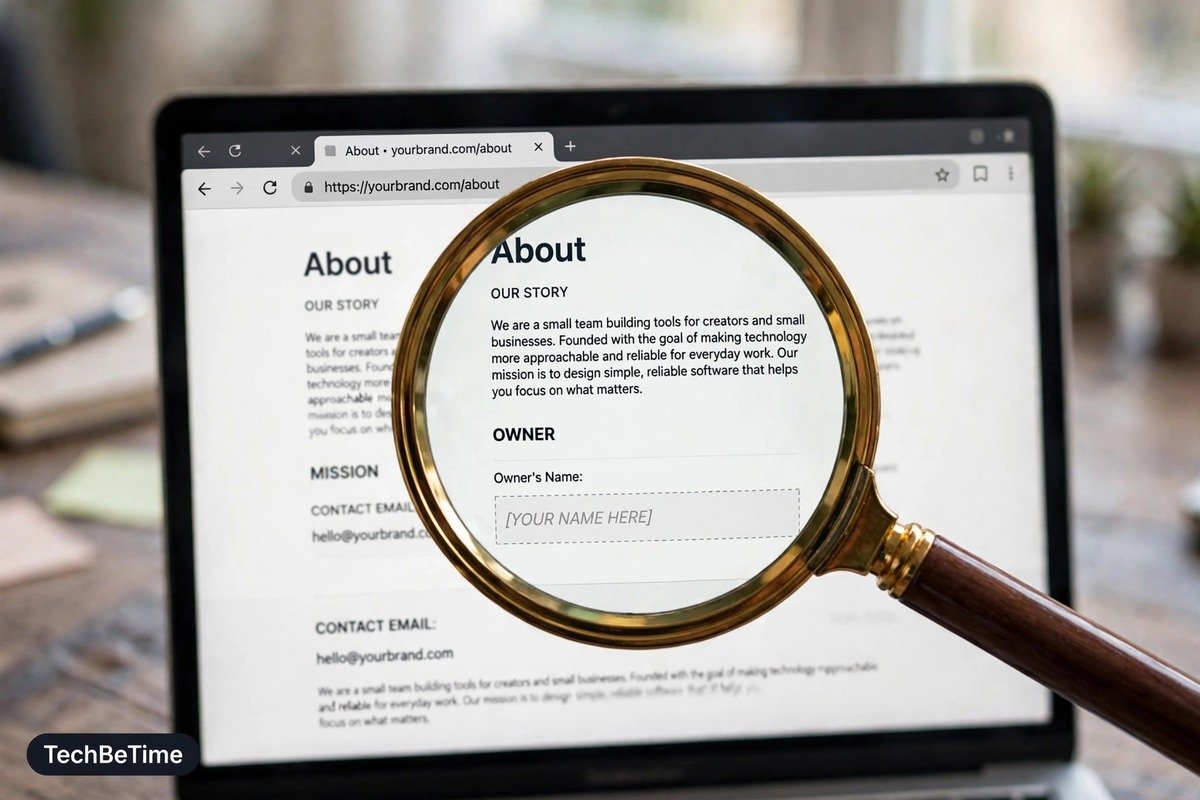
- Its About page still contains an unfilled template placeholder. It reads: “Pushwiki is run by ==[your name]==, ==[one line about who runs the site and your experience]==”. In fact, we verified it live on the About page. That is a notable professionalism and transparency gap. An About page is where a site introduces itself to the world. Leaving it as a template for years suggests the site is maintained rather than managed.
- No visible editorial review process. There are no author credentials, and no clear disclosure of sponsored, guest, or paid-link content. The homepage references “Rank Up Bytes”, a digital-marketing agency linked to guest posting and link-building. In other words, that suggests some content may be commercial placements without clear labelling.
- Named contributors exist but have no credentials. Most articles are by Shivi Hyde or Devin Haney. Author pages show article archives only, with no bios, qualifications, or verifiable credentials. A byline without a bio is better than no byline at all. But it still does not tell you whether the author knows the subject.
- It is weakest exactly where authority matters most. The most critical independent review concludes PushWiki is “most useful as a starting point for general research”. It also notes the site lacks the transparency and expertise expected of an authoritative reference, especially on health, finance, and law content, where no qualified reviewers are shown. That is the right verdict, and it is also the most useful one. In short, use the site to orient yourself, then go to a qualified source for the answer that matters.
4. PushWiki Copycats — Watch the Spelling
Copycat domains exist that publish near-identical “PushWiki” guides: pushwikicom.co.uk and pushwiiki.com (note the double “i”). In fact, these are not the real site. Always check the exact domain — pushwiki.com — in your browser address bar before trusting or contacting it. The copycats exist precisely because the real site’s name is easy to mistype and its brand is generic enough to imitate. In the end, one extra letter is all it takes.
5. How to Use PushWiki.com Safely
- Use it as a starting point, not a final answer. Its guides are good for quick background reading. But verify important claims — especially on health, finance, and law — against a qualified source.
- Do not treat it as a wiki. No page here is community-edited or peer-reviewed, so its articles carry no more authority than any other small blog. In short, the name promises collaboration, and the site delivers ordinary blog posts.
- Do not share personal details. The site needs nothing from you to read, and its public contact is only a Gmail address.
- Check the domain spelling. For example, copycat domains with near-identical names publish similar-looking guides, and the double-“i” variant is deliberately easy to miss.
- Be careful with commercial content. Some articles may be guest placements or link-building content without clear labelling.
Final thoughts
Think of PushWiki.com as a free general-knowledge blog with a misleading name. It is legit and safe to read, but not a real wiki and not an authority. Its articles and free tools cost nothing and carry no technical risk. Yet its anonymous ownership, unfilled About page, and lack of editorial credentials mean it works best as a first stop for background reading. For anything important, especially health, finance, or legal questions, verify elsewhere. The site’s own name is the best summary of its problem. In the end, it promises a wiki and delivers a blog, and once you know that, everything else about it makes sense.
Frequently Asked Questions
What is PushWiki.com?
It is a free multi-topic informational blog covering business, technology, finance, health, education, law, and travel. It also offers three free tools. Despite its name, it is not a real wiki.
Is PushWiki.com safe?
Yes, to read. Our checks found no malware, phishing, or scam flags, and it does not ask for personal or payment data. Its ownership is anonymous, so caution applies to trusting its content, not to visiting it.
Is PushWiki.com legit?
It appears to be a legitimate, actively publishing website running since 2023. However, its About page still contains an unfilled template placeholder, which is a transparency gap.
Can anyone edit PushWiki.com?
No. Despite the “wiki” name, there is no public editing, revision history, or contributor system. In fact, its pages are standard blog articles.
Is PushWiki.com the same as pushwiiki.com?
No. Pushwiiki.com (with a double “i”) and pushwikicom.co.uk are copycat domains publishing similar-looking guides. The real site is pushwiki.com.