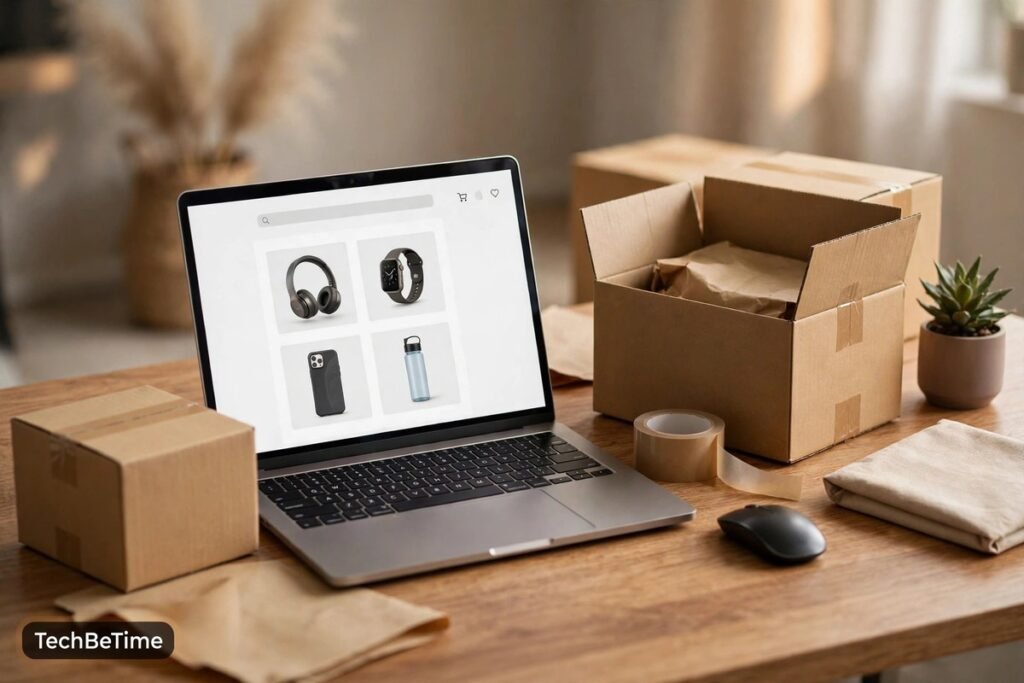
How to Start Dropshipping in Pakistan in 2026: Complete Beginner’s Guide
Introduction
Dropshipping in Pakistan is one of the most popular ways for beginners to start an online business. You do not need a shop, a warehouse, or a large amount of money to buy stock. You list products online, a customer orders from you, and your supplier packs and ships the product directly to the customer. Your profit is the difference between the price you charge and the price your supplier charges, minus delivery and platform costs.
It sounds simple, and the basic idea is simple. But dropshipping in Pakistan works differently from dropshipping in the US or UK, mainly because most Pakistani buyers pay cash on delivery. That one difference affects your cash flow, your return rate, and how you confirm orders. This guide explains how it actually works in Pakistan in 2026, what it really costs to start, and how to avoid the mistakes that cause most beginners to stop in the first few months.
What Is Dropshipping?
Dropshipping in Pakistan is a retail model where you sell products you never keep in stock. You list a product, a customer orders it, you pass the order to your supplier, the supplier ships it directly to the customer, and you keep the difference between your selling price and the supplier’s price, after delivery and other costs.
You never touch the product. That removes the biggest barrier for most new sellers: you do not need to import stock or rent storage space. The trade-off is less control. You depend on your supplier for product quality, packing, and delivery speed. If the supplier is slow or sends a damaged product, the customer will blame you, not the supplier.
Why Cash on Delivery Changes Dropshipping in Pakistan
In Pakistan, cash on delivery, or COD, is not just a payment option. For many online buyers, it is the default. Most orders are paid in cash when the courier arrives at the customer’s door.
That changes the business in three ways.
- First, the money arrives late. The courier collects the cash, deducts its fee, and sends the balance to the supplier or platform on its own settlement cycle, often roughly weekly, but timing varies by courier.
- Second, refusals are real. Because the customer has paid nothing in advance, some parcels are refused or returned undelivered. Return-to-origin rates vary a lot by product, area, and how well orders are confirmed, and guides for Pakistani sellers commonly report rates in the range of roughly 10 to 25 percent, with some reporting higher rates for COD orders. Each refused parcel still costs you the courier trip.
- Third, confirmation matters. A quick WhatsApp message or phone call to confirm an order before dispatch is normal practice in Pakistan. It filters out fake orders, wrong addresses, and impulse orders, and it is one of the cheapest ways to reduce returns.
The Two Ways to Start Dropshipping in Pakistan
Beginners usually enter through one of two models. Many sellers start with the first and move to the second later.
Model 1: Share-link reselling apps. Apps such as Markaz give you a catalogue of products held by their own suppliers. You pick items, add your margin, and share product links on WhatsApp, Facebook, or TikTok. When someone orders, the platform ships the product, collects COD, and pays your margin to your Easypaisa or JazzCash wallet. You need no website and no upfront investment, but you have limited control over product quality, branding, and pricing.
Model 2: Your own storefront. This is running your own online store, with your brand, your prices, and your customer list, while suppliers fulfil orders behind the scenes. You can build a store on Shopify, the most common platform for dropshipping stores, or start with Facebook, Instagram, and WhatsApp and add a store later. A store gives you more control and lets you build a brand people trust, but it costs more and needs more work.
How to Start Dropshipping in Pakistan in 5 Steps
1. Choose Your Niche
Your niche decides your products, marketing, customers, and margins. Do not try to sell everything. In a competitive market, niche sellers usually do better than general stores. Good niches for beginners are everyday products that are easy to ship and easy to explain in a short video or photo:
- Home and kitchen items
- Beauty and personal care
- Phone accessories
- Baby products
- Simple fashion accessories
Avoid, at least at the start, regulated products such as supplements and medicines, heavy or fragile items, counterfeit-prone categories such as luxury replicas, and anything that needs after-sales technical support.
2. Find a Reliable Supplier
Your supplier decides your delivery speed, return rate, and reviews. Before you list a product, ask about delivery time, COD handling, return policy, product quality, and packing. Start with two or three suppliers. Place a test order from each to your own address and judge them on what actually arrives, not on their WhatsApp catalogue. Local Pakistani suppliers usually work best for local orders, because they hold stock in Pakistan and can deliver faster. Platforms such as Zambeel focus on Pakistani sellers and also work for Gulf markets such as the UAE and Saudi Arabia. International suppliers such as AliExpress and CJ Dropshipping are also used, but delivery from abroad is slower and more complicated for COD orders.
3. Set Up Your Store
Social commerce is best for beginners with little or no budget. Create a Facebook Business Page, set up a product catalogue, run targeted ads, and take orders through WhatsApp or Messenger. No website is needed. Facebook Marketplace and Facebook Shops are a good starting point, and Instagram Shopping works well for fashion and beauty.
A Shopify store is best for building a real brand with full control. It gives you your own customer list, tracking for ads, and a professional store people trust. Keep it simple: fast pages, real photos, clear delivery and return information, and COD at checkout. Shopify is a paid platform in US dollars, so check the current plan price on Shopify’s website before you commit. You do not need it on day one.
4. Pricing and Marketing
Your price must cover the supplier’s price, delivery, advertising, returns, and your profit. Many Pakistani dropshippers report margins of about 20 to 40 percent per product, but margins vary a lot by niche, supplier, and advertising cost. Work out your real costs before you set a price, and test a small number of products first — 10 to 20 products in one niche, not 200 random products.
Once orders start coming in, plan for growth with Growth Navigate Funding.
Facebook ads are the most powerful tool for most Pakistani dropshippers. You can target by city, age, and interest, start with a small daily budget, and test several creatives. TikTok is also growing fast for product videos. Install the Meta Pixel and Conversions API on your store before you launch ads, so you know which ad brought the order.
Most sales will come from social media. Promote your store with social media tools such as EmbedTree.
5. Handle Orders, COD, and Returns
- Confirm every order by WhatsApp or phone call before dispatch.
- Check the name, address, and phone number, and confirm the customer still wants the product.
- Keep a simple record of every order, every courier remittance, and every return, and match the money the courier sends you to the orders you sent.
- Be honest in product descriptions and photos. Honest listings reduce returns and build trust, which matters more than one quick sale.
Common Mistakes Beginners Make
- Selling everything at once
- Choosing a supplier without a test order
- Ignoring COD returns
- Spending too much on ads too early
- Copying photos without checking the product
- Treating it as a hobby instead of a business
- Keep records, honour returns, and get your tax registration in order, such as an NTN, once you are earning regularly.
Final thoughts
Dropshipping in Pakistan can work, but it is not a get-rich-quick scheme. It is a real business that needs a clear niche, a reliable supplier, honest product listings, and careful handling of COD orders. Start small, learn one niche, test a few products, confirm every order, and keep your records clean. Start with what you can afford to lose, test, learn, and improve one step at a time.
AI can speed up listings and customer replies. Try Microsoft Copilot.
Frequently Asked Questions About Dropshipping in Pakistan
Is dropshipping legal in Pakistan?
Yes, reselling products online is a normal business. Be honest in product claims, honour returns, and get your tax registration in order once you are earning.
How much money do I need to start?
You can start with very little using a share-link reselling app, because you need no website and no stock. A storefront needs more money for the store platform and for ads, so start small and grow from sales.
Do I need a website to start?
No. Many beginners start with Facebook, Instagram, and WhatsApp. A website or Shopify store becomes useful when you want to build a brand, track ads properly, and keep your own customer list.
How do I get paid for COD orders?
The courier collects the cash, deducts its fee, and sends the balance to the supplier or platform on its settlement cycle. If you use a reselling app, your margin is usually paid to your Easypaisa or JazzCash wallet.
Can I sell to customers in other countries from Pakistan?
Yes, but payment is the first problem, because Shopify Payments, Stripe, and PayPal are not directly available to Pakistan-registered businesses in the same way. You need a compliant way to collect payments before you spend money on ads for overseas customers.
Pingback: How to Apply for a Pakistan Passport Online in 2026: Step-by-Step Guide - Tech Be Time
Pingback: GlobalUnpaid.com: Meaning, Features, Categories, Safety, Legitimacy, and Complete Website Review (2026) - Tech Be Time
Pingback: Yonochomp.com: Meaning, Features, Safety, Legitimacy, and Complete Website Review (2026) - Tech Be Time